Sunday, November 15, 2009


So, How 'bout those Single Engine Jets? I thought it would be fun to see how the Cirrus program is coming along. Things have been a bit "disruptive" lately, with some management changes, but I think it is a promising program.

There's a great short article in Flying Magazine, March 2009, by Robert Goyer, Cirrus Vision Jet Gets Lighter. While tempted to place it "between" the Eclipse EA400 and EA500, marketing-wise, it is interesting to note that at 6000 MTOW (or 5,999, depending), and 1900 lbs thrust, spec-wise, it is much closer to the EA500. Performance wise, it is not quite so impressive compared to the EA500 though, with a full-fuel usable load of 400 lbs, and a max speed of 320 knots (odd that Cirrus compares it to the SR-22 Turbo: "Cirrus is designing the Vision SF50 jet to be a step-up aircraft for a pilot currently flying a high-performance single, like the Cirrus TURBO, or a twin engine piston rather than being a down-sized business jet. The Vision will carry more payload, farther and faster than the Cirrus TURBO while maintaining the same outstanding handling characteristics". Certianly the SR22 turbo is a very fine airplane, but still, using that comparison in one's own marketing information seems a bit overly modest. (Especially if there is a 300-400 percent price difference...)

"The New Cirrus Jet"
(Philip Greenspun's Blog; June 17, 2009- (It's not so new to readers here). Seems like I frequently come across Philg's postings when I'm searching for something or other on the web regarding airplanes. He's a good writer and observer- an interesting read indeed.
"I sat in a mock-up of the new Cirrus Jet today alongside Alan Klapmeier, the company’s co-founder". "If the Cirrus Vision jet can be delivered at anywhere near the originally promised price ($1 million 2006 dollars) it will certainly be a revolution in family jet" (!?! Guess KoolAid had to make up for lost sales in New Mexico somehow).
(About six weeks later, Alan Klapmeier was out, and his bid to take over the program rejected. Sounds like an outstandingly talented and pssionate aviation enthusiast. But I wonder if that poppycock about $1M had something to do with it...I think we've seen enough of that kind of bunk for a while. Still, he did a great job growing Cirrus from 1984-1999. Too bad Eclipse didn't study Cirrus. Or Cessna).

S-T-E-P Right Up!!
(This is from the Cirrus web site, Nov 16, 2009):
"Our expectations for the base cost will start around $1 Million US dollars...We are presently accepting deposits* for delivery positions and we will eventually ramp up to a delivery rate of one jet per business day. We expect the annual order rate will closely match the delivery rate, so the wait will never be shorter than it is now."

Private Plane Manufacturer Cirrus Aircraft Offers Vision Jet
(International Business Times, September 10, 2009):
"Customers who reserve their aircraft between now and December 31, 2009, with a non-refundable $100,000 deposit, the maximum purchase price for a Vision Jet will be $1.55 million. The price will then increase beginning in January 2010".

Cirrus Hiking the Price of Vision Jet
(AIN, Chad Trautvetter, October 1, 2009):
"Cirrus Aircraft last month raised the price of the single-engine Vision Jet, a personal VLJ, to $1.39 million for existing position holders and to $1.55 million for new orders placed before December 31. The price increases to $1.72 million for orders placed after January 1."

(? $1.0M, $1.39M, $1.55M, $1.72M, in "2009 dollars", think maybe $2.0M in 2012?)

"Cirrus Jet in Capital Crunch, But Progressing
(AVweb, Mary Grady, November 5, 2009):
"Undertaking the development of a light jet is a project "not for the faint of heart," Cirrus CEO Brent Wouters said at AOPA's Aviation Summit on Thursday..."
(Nor for the light of wallet...at least not when they start... although they do tend to get that way).

A memo from Brent Wouters, Cirrus President & CEO to Cirrus Aircraft Employees.
(Cirrus, November 10, 2009):
"Cirrus CEO notes significant progress in last 12 months, seasonal adjustsments still to be made and increasing optimism heading into 2010 in message to all employees".
(Nice that he's trying to keep everyone informed- I suspect the rumor mill there had a jump on the story before it was official though).

Cirrus Reduces Staffing Levels
(NorthlandNewsCenter, November 11, 2009):
"Company officials say more than 50 people are being furloughed...Cirrus officials says the move is in regard to an anticipated decline in economic demand during the first quarter of next year...Officials say the curtailments will not impede progress on Cirrus' jet program."

Cirrus Vision Overview
Nice slide show for "jet position holders". (That sounds a little more dignified than the Eclipse "position holders" nomenclature).

(Despite earlier metion of the L3 SmartDeck avionics package, the overview says V1 prototype updated to Garmin Perspective, which makes sense, since their piston lineup also uses Garmin).

But it looks as if there were some hard feelings over that:
L-3 seeks $21.7 M from Cirrus in SmartDeck Lawsuit.
(AINonline, Stephen Pope, July 1, 2009):
"L-3 says Cirrus then agreed to go ahead with the purchase of 75 SmartDeck systems, but in December asked that L-3 not ship the systems because of a slowdown in aircraft orders. In February L-3 sent Cirrus a bill for $18.7 million to cover SmartDeck development costs. Cirrus allegedly replied that it owed L-3 only $3.5 million–the stated purchase price for the 75 systems. Since then, “Cirrus has failed to pay any amount due to L-3 and has not responded to any communications from L-3,” the avionics maker said in its lawsuit, which is requesting an additional $2.99 million to recover money allegedly owed for stand-alone systems."

And, with the Cirrus cancellation, so far no announced OEM is using the L3 SmartDeck avionics package (New Flat Glass "L3 introduces SmartDeck with Huge Displays"
(Flying Magazine, November 2007, J. Mac McClellan).
Well, I guess in 2007 12.1 inches was "huge".
Still pretty nice, but I think the Garmin G3000 is 14.1 inches).
(Consistent with apparently no firm users for the SmartDeck, the L3 website, all the "news" articles are from 2007...)

As some have pointed out, the now-cancelled Grob SPn was using the Honeywell Apex avionics suite.

Grob went bankrupt, but it looks like somebody has bought them (yeah!), as their website seems to still be up, with some recent minor news).

Interestingly, as others have noted, Avidyne has a nice upgrade package for the piston powered SR-22 Cirrus aircraft).

Looks like Cirrus was going to use the old Northwest Airlines facility at MSP for the Vision Jet, until things slowed down.


Sunday, November 8, 2009

The Airplane that won the Cold War

That's a pretty impressive accolade! Where'd I get such a notion? By reading an article in the Smithsonian Air and Space magazine (July 2008), which perhaps put it even a bit more "enthusiastically", naming it one of the ten "Aircraft That Changed The World".

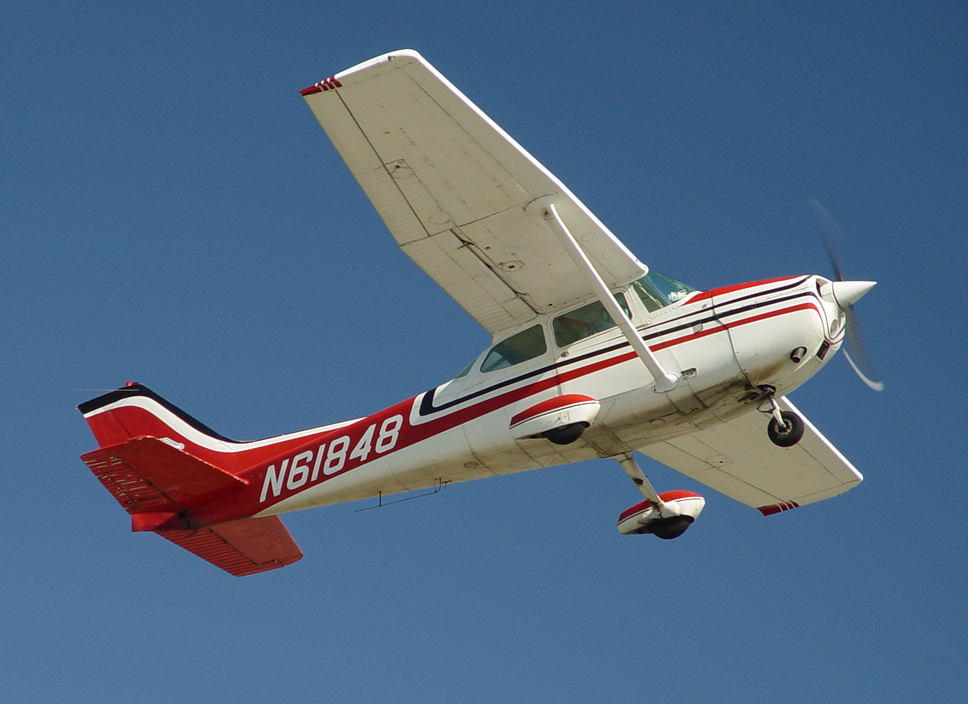
What secret military technology did this device conceal? Well, none. It was the "mission" it was flown on, also expounded upon by the Smithsonian some time earlier (June/July 2005 issue), "The Notorious Flight of Mathias Rust".

At the time, the general perception conveyed in the U.S. press, was this was an amusing stunt performed by a naive but somewhat unbalanced and delusional extremist.

(And, perhaps he was...Mathias Rust).

But to his credit, he had done some thinking (on things besides flight planning: 550 nm flight was at the far end of the Cessna's range): "To many Europeans, Mikhail Gorbachev’s ascendancy to the Soviet leadership in 1985 offered a glimmer of hope. Glasnost, his policy of transparency in government, and perestroika, economic reforms at home, were radical departures from the policies of his predecessors. So when the U.S.-Soviet summit in Reykjavik, Iceland, in October 1986 ended without an arms reduction deal, Rust felt despair. He was particularly angered by Reagan’s reflexive mistrust of the Soviet Union, which Rust felt had blinded the president to the historic opportunity Gorbachev presented."

Reykjavik Summit, Oct 11-12, 1986.

With today, November 9, being the 20th anniversary of the nominal observation of the "fall of the Berlin Wall", I think the humble Cessna 172 deserves it's due credit.

From U.S. News and World Report, June 15, 1987:
"Mathias Rust surely had no thoughtof doing Mikhail Gorbachev a favor. But last week, Gorbachev was trying to turn what could have been humiliation into opportunity by undercutting the old military establishment and launching what may be the long-awaited mopup of opponents--military and civilian --who impede his reforms. Rust's tiny plane, which he had flown unscathed through vaunted Soviet air defenses, was still parked near Red Square when Gorbachev began firing and promoting military brass. His dismissal of Defense Minister Sergei Sokolov, 75, appeared only the first step in a purge of recalcitrant officers."

Gorbachev and glasnost: viewpoints from the Soviet Press by Isaac J. Tarasulo, Dec 1989):
"For two years Gorachev did not attempt to interfere with military personnel decisions. While military leaders supported Gorbachev's call for revitalizing the Soviet economy, they believed themselves exempt from these changes. Exempt, that is, until May 1987. On May 28, 1987, nineteen-year-old Mathias Rust landed his Cessna 172 in Red Square..."

NYTimes, June 1, 1987:
A Test for Gorbachev...
"The scalding public indictment of the military signaled that even the most revered and powerful institutions would be subject to open criticism...Since taking office in March 1985, Mr. Gorbachev has pressed to hold down growth in military spending and has pursued a number of foreign policy initiatives, including an 18-month moratorium on underground nuclear testing, that have troubled the military." (How's that go again, that we forced the Soviet Union to economic collapse with an arms spending race?)

"Tear Down This Wall". (Ronnie reads his lines, on June 12, 1987. He was in Germany to bolster support for Pershing II nuclear missile deployments in Europe).

Two weeks after the Cessna 172 landed.

Reagan ends his second term, on Jan 21, 1989.

"In May of 1989, Soviet President Mikhail Gorbachev visited West German Chancellor Helmut Kohl. Gorbachev told Kohl the Soviets would not block democratic reforms in Warsaw Pact nations".

In June 1989, the Polish elections legitmize Solidarity.

On August 23, 1989, Hungary removed its physical border defences with Austria, and in September more than 13,000 East German tourists in Hungary escaped to Austria.

The East German head of state Erich Honecker, from 1971 until 1989, is forced by his own Poltiburo to resign on October 18, 1989. (The big significance: "In 1961, Honecker, as the Central Committee secretary for security matters, was in charge of the building of the Berlin Wall.")

"East German government announced on November 9, 1989, after several weeks of civil unrest, that all GDR citizens could visit West Germany and West Berlin."

"The fall of the Berlin Wall paved the way for German reunification, which was formally concluded on October 3, 1990."

What a wonderful moment in history, to be celebrated! It was amazing how fast Germany reunification happened- I remember estimates of the year 2020-2040. (Erich Honecker, The Party Leader in East Germany:"The Wall will be standing in 50 and even in 100 years, if the reasons for it are not yet removed." (Berlin, 19 January 1989).

Sunday, November 1, 2009

What's Next for Eclipse ?

Now that the drama regarding Eclipse Aviation Corporation bankruptcy has been resolved, with Eclipse Aerospace winning the bid for $40M (or, well $20M plus promises to Al Mann and others, and discounting the $10M that Al Mann put in himself, leaving $10M, of which around half was borrowed, we can conclude that the fabulous assets of EAC (and none of the even more fabulous liabilities) were "locked up" for about $5M plus another $5M OPM (other people's money). Anyone think a $5M+ player is going to restart production with those kind of "deep pockets"? I think there's two probabilities:

1) No How
2) No Way

IMHO: They're gonna flip that sucker like a pancake!

From the press releases (admittedly, perhaps a bit, "Verntastic"), the facilities and infrastructure, and inventory and IP, were all substantial, worth MUCH more than $5M or $10M. For comparison, Cessna paid $26M for Columbia, a company with a very nice, but MUCH lower price point than the Eclipse (at least, a sustainable price point). That was during the "boom" times; but with all probability, there's going to be another "boom" time again, as our investigation of the past five business cycles, over the past 40 years showed.And when it comes, the Eclipse facility will be a hot commodity- I'd figure, with IP and what will be by then, a fully functioning parts and service network. I'd say to the tune of $100M or more.

And until then, Eclipse Aerospace wins, and the customers and supplier base wins, with parts and service support. NewCo might even make some bucks selling off excess facilities. Or subcontracting bits and pieces for other OEMs (aviation or non-aviation related) in lieu of manufacturing restart up. And make some bucks on the training program. And some bucks on the DayJet fleet. And some bucks on the assembly line articles- if they can be finished and delivered, even without PC (using individual FAA inspection- there's not all that many of them). And make some bucks either selling or licensing the EA400 Single Engine Jet (Con-Jet). For that matter, even licensing the EA500, without ever restarting production in ABQ.

Maybe some bucks in licensing the Phoestrex patent? (If the legal squable- yes, ANOTHER Eclipse OldCo legal squabble, has been patched up with the patent holders- see Dave Ivedorne's excellent post, on March 25, 2009, 2:54 PM). Although OldCo claimed it patented Monday and sunrises, there is some legal dispute in those regards as well. (I think a patent for Friday afternoon would be more marketable than the one for Monday morning though).

Or doing some sort of contract FSW for a military program or two?

I for one, think some foreign interests might pursue Eclipse, either license or the entire factory; Piper was bought by Imprimis, based in Brunei. (Apparently, for $20M in 1998+ $35M in 2003 + $31M profit = $86M. According to GAMA; in FY 2008, Piper delivered 216 pistons, and 52 turbines, Eclipse delivered 161 aircraft- in the first 8 months or so- I suspect Eclipse "out billed" Piper, and it would have been even more so if EAC hadn't stalled in the last part of the year).

And Emivest of Dubai owns the old (VERY old now) SJ30 program (nie, Sino-Swearingen SJ30; arguably/possibly, the only GA story rivaling Eclipse for weirdness).

How interested were the Russians? Since Eclipse denied (for a while anyway) any Russian connection, I figure just the opposite was true, to some extent. And remember, oil prices, on which the Russian boom was based, were over $125/barrel in the heady times of initial ETIRC involvement, but plummeted to below $50/barrel, when the time came to close the deal.

How interested were the Chinese? Definitely some courtship, at least contemplated. ("AIN has been in contact with a person who said he represents a Chinese company interested in bidding on the Eclipse assets, but he would not reveal any details by the time this article was published. He also would not confirm if he represents China Commercial Aircraft, which is interested in bidding on Eclipse’s assets, according to a March 17 article in the Albuquerque Journal." For those not following the Chinese aviation industry, there has been a shakeout/re-organization in progress, actually, for the last six months or so- which might have, er, dare I say- disrupted- plans for Chinese involvement. As might engine and avionics technology export concerns, etc. By sitting on the assets, EAC-NewCo might be, literally, buying time, for these details to be worked out. (The blog reported the FBI was asking questions some months back, presumably related to technology export concerns, with an undisclosed suitor).

And per the article about Columbia Aircraft above, they were owned by an affiliate of the Malaysian government.

How about Fuji Heavy Industries- they are doing the FSW wing assembly, with tooling and technology shipped from Albuquerque to Japan- maybe they'd be interested in buying the rest of the tooling and IP for an EA500 final assembly line in Japan? (Or just keeping in in New Mexico, for ease of dealing with a Production Certificate).

And I'm not arguing that production of the EA500 won't restart, and not even that it won't restart in ABQ- I think it very well might. (And personally, I hope so- on both accounts).

But I just don't see it happening with the current team that took months scraping together $5-10M. It will be a deep pockets adventure ($100-200M, if the ETIRC figures used in 2008 are a reasonable guide).

Could the current owners restart production? Possibly. But why would they want to, if they can "flip" the company for a 500-1000% return in a couple of years? And make a profit in the mean time, by providing parts and service.

Personally, I think they've made a very smart move by acquiring the assets to Eclipse. If the plane turns out to be a turkey, they make a mint by providing engineering, service, and parts. On the other hand, if turns out to be a great airplane, that just enhances the market value of the production facilities, once the larger economy improves in a year or two. Which is about the time it will take to work through the Dayjet fleet and customer-delivered rework.

So I think they're pretty smart guys (and seemingly, pretty honest guys too). My bet is they are smart enough to be aware of the adage;

"Q: How do you make a small fortune in aviation?"
"A: By starting with a large one."

I think there is nowhere that this is more true than in the manufacturing end of aviation.

Of course, priorities change, when working with OPM (other people's money). As we have well seen.

Still, I'd buy stock in Spatula City!

Sunday, October 25, 2009

"NEGLIGENT MISREPRSENTATION, NEGLIGENT FAILURE TO OVERSEE AND CONTROL, CONSTRUCTIVE FRAUD, BREACH OF FIDUCIARY DUTIES, CIVIL CONSPIRACY AND VIOLATIONS OF THE NEW MEXICO UNFAIR PRACTICES ACT"

There has been some buzz on the blog about pending civil legal action involving jilted depositors. Looks like, as usual, the blog was on to something.

A casual perusal of www.NMCourts.gov/caselookup/app, and using a small variety of names and keywords commonly associated with the former Eclipse Aviation Corporation* reveals:

Case Number: D-202-CV-200911924
SM et al .v. Raburn V et al
Court: ALBUQUERQUE DISTRICT
Filing Date: 10/09/2009
(140 plaintiffs)
Which alleges:
"NEGLIGENT MISREPRSENTATION, NEGLIGENT FAILURE TO OVERSEE AND CONTROL, CONSTRUCTIVE FRAUD, BREACH OF FIDUCIARY DUTIES, CIVIL CONSPIRACY AND VIOLATIONS OF THE NEW MEXICO UNFAIR PRACTICES ACT"

Against defendants (with the results of an internet name search and their probable association with Eclipse):

Vern Raburn...(CEO)
Harold Poling...(BoD)
Kent Kresa...(BoD)
Al Mann...(BoD)
Edward Lundeen...(VP International Sales)
Roland Pieper...(CEO)
Mike McConnell...(President & GM)
Andrew Kamm...(VP Finance)
Mark Borseth...(CFO)
Margaret Billson...(COO)
Todd Fierro...(VP of manufacturing)
John Ricciardelli...(VP Product Support)
Andrew Vitka...(VP/Chief Accounting Officer)
Matthew Malfitano...(Director of sales)
Ricardo Conreras...(legal dept)

This case was filed on Oct 9th; a few days later several others were filed, with different plaintiffs:
Case Number: D-1329-CV-200902423
VF Manufacturing .v. Vern Raburn
Court: BERNALILLO DISTRICT
Filing Date: 10/14/2009
"Breach of Contract"
(2 plaintiffs)

Case Number: D-101-CV-200903325
Opus et al .v. Vern Raburn et al
Court: Santa Fe District
Filing Date: 10/14/2009
"Contract Miscellaneous"
(79 plaintiffs)

Case Number: D-202-CV-200912018
Echo Leasing, et al .v. Raburn, V. et al
Court: ALBUQUERQUE DISTRICT
Filing Date: 10/14/2009
Other Damages
(45 plaintiffs)

While the first suit names (with 140 plaintiffs) features exclusively prominent figures, these last three have a mixture of prominent, and seemingly obscure (nothing came up on the internet in association with Eclipse) persons- I am sad to see difficulty in anyone's life- whether it be financial, health, family, or legal duress. Many involved with Eclipse have already suffered enough duress already. (I would suspect some were just "in the wrong place, at the wrong time").

On the other hand, to read the old Eclipse Press Releases, many of which were patently ludicrous, makes a person wonder, just who knew what- and when.

While it is distressing to contemplate how much cash Eclipse incinerated, WAY past the point of economic viability, at least to a) anyone who has studied the aviation industry for a modest amount of time, and/or b) who doesn't believe in Santa Claus anymore; it is worth pointing out that nobody seems to have profiteered from this misadventure. In fact, just the opposite- it seems there was every effort made to keep the corporation afloat. (And THAT is probably the crux of the legal action- some the desperate actions seem...well, shall we say, desperate).

There were undoubtedly lots of important issues on the line (figuratively, as well as literally); partially assembled aircraft, financial obligations to investors and tax payers, and jobs at Eclipse and at suppliers- so dedication to purpose is to be admired. These are all great things for the aviation community to rally around. But, there comes a point, where trying harder doesn't help if the business plan just isn't viable- at that point, trying harder just digs the hole deeper, and doesn't fill it in. Eclipse just keep digging deeper, and asked depositors (who did not have innate knowledge of the privately held company's finances) to do the same. The moral threshold seems to have been when "customers" were treated as de facto "investors". But that's probably not where the legal line is, as the purchase contracts were probably constructed to indemnify Eclipse in the event of financial difficulty. IANAL (I am not a lawyer, as Dave I would say), but the allegations seem to be related to issue of the depositors, as de facto investors, not being properly represented or informed by the Board of Directors and officers of the corporation./?/! (I think the depositors accepted the technical risk involved with the EA500, and EA400, but were perhaps unaware of the true financial risk ?).

So, it will be interesting to see how much of the Eclipse saga gets revealed "for the record". As one of aviation's favorite disruptive ex-CEOs once said, paraphrasing, "(I) would be happy to respond to critics who aren’t anonymous".

It looks like there will be a day in court, to do just that. (About 266 non-anonymous critics involved- not sure how much "happiness" is involved though, on anyone's part. Let's hope there is, somehow, an outcome that satisfies everyone- a pretty tall order, I fear. The best outcome might be just knowing what went on, and why).

(*For new readers, it is important to point out, this involves the former Eclipse Aviation Corporation, NOT the new Eclipse Aerospace Corporation).

Monday, October 19, 2009

NBAA 2009


Honeywell released their eighteenth annual business aviation outlook this week, coincident with the NBAA convention in Orlando FL (Oct 20-22). The chart shows their overall forecast of the biz jet deliveries for the next 10 years. Next year is forecast to be about 10 percent slower than this year.

In the "glass half full" department, if one considers that most 2009 deliveries occurred in the first half of this year, then perhaps it is correct to infer that the current delivery rates represent the bottom of the production rate forecast.

(In the "glass half empty" department, the forecast shows strong sales for the nine years after 2010; some earlier review of the past five business cycles suggests that their is about an eight year period, which would have a downward trend resuming in 2019 or so. Maybe globalization, etc. will keep it from happening in 2019. Then again, it was supposed to keep it from happening this time too...).

Jack Pelton, Cessna's CEO, had some words of cautious optimism. Pelton commented "the international markets seem less frozen than our domestic market right now, particularly Western Europe and South America" (indeed as our friend Baron noted on his recent visit to Brazil).

China is stimulating the business jet market somewhat as well, relaxing domestic flight plan filing to three hours, and reducing tariffs.

In the cool news department, Garmin unveiled their G3000 suite, for "light turbine" aircraft. (Still a couple years away from deployment).

In other cool news, Learjet has their in-development model 85 mockup on display there too, with it's revised flight deck.

It will be interesting to hear what visitors to the NBAA show have to say regarding attendance and displays- please drop a line or make a post to update us!

Sunday, October 11, 2009

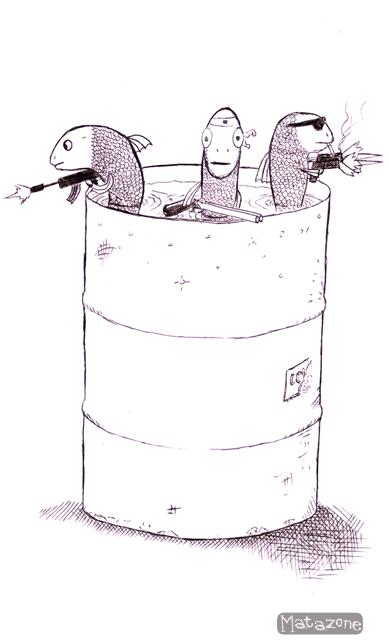
Shooting Fish in a Barrel


It was interesting to read the Eclipse Aerospace Customer Communique" last week (I guess they figure the previous owners gave the term "press releases" a bad name).

Over the past months, there has been much speculation on when (or if) production of new aircraft will resume. The new owners are cautious about that, saying it is months to years away. I don't have any idea, other than regrettably endorsing their cautious note, as it appears the market will be slow for months to come.

So, a quesion might arise, did the new owners get a good deal when they purchased the assets?

Well, that depends, on what they paid, and what they got.

The figure of $40M is used as lot, but the not so fine print is $20M in cash, plus $20M in notes.

The notes are "promises", so the real skin is $20M. (Earlier buzz had it that Al Mann put up $10M, M&M put up $5M, and somehow another $5M showed up in an unmarked bag- or something like that).

So, what came with the deal?
How about 400K square feet of floorspace?
350,000 sq ft at the main airport, and another 41,000 sq ft at a nearby satellite airport. (At $10M, that's 25 $/sq ft).

And, then there's the airplanes on the assembly line, some nearly finished, some less nearly- maybe 25-30 total. Maybe enough parts on hand to finish some of them? Or a good prelude to low-rate spares/completion delivery from suppliers. (At $10M, and say 25 planes in semi-completion, that's $400K each)

Plus another 28 or so Dayjet airplanes- earlier configurations in some cases, but still, flying assets. (At $10M, that's $357K per airplane).

And how about the flight test airplanes? I don't know if these were refurbished and delivered, or used for customer training, or demonstrators- I think there were around half a dozen of them. (Let's say five flight test airplanes- for $10M that comes out to $2M each- early models yes, but also configured for testing, a blg plus for future development exercises.

Speaking of flying airplanes, and future development exercises- how about the EA400 (aka "Conjet"). How many people did it take, and how long? Beats me. But figuring the engineering, wind tunnel, and construction time; plus avionics, engines, structure, etc, I'd say 50 people x 2 years x $100K/man-year = $10M for the design, construction, and preliminary testing. (At Least- probably double that cost in real life).

How about a captive market for service, since most of parts are not PMA'd, and will have to go through the TC holder? The best-case upgrade (already equipped with new boots and AvioNG) is 150-ish $K, probably on the long side of double that for older configurations- say they can clear $50K per mod, with 200 airplanes (260 less Dayjet, test fleet, reluctant participants), that's $10M. (Or more, with other maintenance).

Any one of these seems to be a good case for buying the assets, especially if a mutually beneficial deal was pre-arranged with Mr. Mann, for later action.

And, I've left out the TC for the EA-500. In 2002, Eclipse said it "will need a total of 'somewhere north of $300 million' to certify the Eclipse 500 and establish production...". So, figure real world, and 2010 numbers, will combine to double that to $600M, and a third of it goes to design, test and certification; that's $200M. Buying this for $10M is an outrageous bargain, IMHO. (How realistic of "stab" is that? Seems like Cirrus was looking at an additional $120M past the flying prototype stage for the Vision certification program).

Now throw in office furniture, computers, copiers.

And, FSW technology; semi-adaptable to other uses, if the layup molds are changed, such as subassmbly work for Detroit, or other airframer OEM's.

I have to admit, I think the Eclipse Aerospace owners got a heck of a bargain.

So what's the key to success? Cash flow. And what generates cash flow? Service work. Which is exactly what I expect them to concentrate on.

Restart manufacturing? I think that is a ways off- if it ever happens. Personally, I think it will. But I'm not sure when (12-30 months, I'd guess).

Or by whom. Or where.

My bet would be a different owner, but still in Albuquerque. We no doubt remember talk of the Russians or Chinese having an interest. I'm still betting on it staying in NM, regardless of where the owner is from. I think the current owners are capable, but they are probably adverse to the hefty investment -and high risk- involved with restarting production. (I suspect Al Mann is in it this time for the sort term, until the economy recovers enough for him to cash out of the airplane manufacturing game. Just a couple of years ago, Cessna paid $26M for Columbia- I like that airplane, but think the Eclipse "package" -factory floorspace, tooling, TC, aircraft and equipment inventory- is enormously more valuable).

I think there is a very good arguement to be made for buying Eclipse assets (in fact, I just recited it above). Once the GA/Bizjet market recovers, I should think a number of OEM's and investment companies would be interested in all or part of their physical assets and/or "Intellectual Property". (For example, I expected Alan Klapmeier to have an interest in acquiring the EA-400 program, after he left Cirrus, and they kept the jet program). The background of the current ownership seems more atuned to merchandising, than manufacturing. And the old adage "How do you make a small fortune in aviation? Start out with a large fortune", would seem to substantiate their priorities.

The good news, for those longing for a restart of the production line: I think the airplane really is very good, especially with the new AvioNG 1.5 configuration. Good enough, that I can't imagine it not going back into production. But that will probably take hundreads of millions of dollars- a long way from the investiment the current owners ponied up. In the mean time, I expect Eclipse Aerospace to have good cash flow with service (it sounds like they are treating the aircraft owners right)- and will probably experience an even better ROI if they can sell the company once the market is strong enough to justify a restart of production.

Still, it will be intriguing to watch. Low rate production might not be that expensive to restart. I believe there was a number going around of 7,000 hours to build an Eclipse. With a shop rate of maybe $60 per hour with overhead and benefits, that would seem doable, and falls right in line with the blog's earlier guestimates of labor cost being about 1/4 of the cost of production. (Engines being another 1/4 also seems about right, airframe components being about 1/4, and avionics and systems being the remaining 1/4; all more or less. Since the suppliers are already tooled up, resuming delivery, even at a low rate, might not be too difficult). I expect the Eclipse show to be interesting for some time to come.

And it is great news that the aircraft owners have factory support once again!

Tuesday, October 6, 2009

A Little Dab (of Precaution) Will Do 'Ya


(And, a brief absence of precaution can do 'ya in...)

The product on the right is Prist fuel additive- mostly for our turbine power friends, although they make a product for avgas too ("Prist Hi-Flash...for aircraft operating in extremely cold climates or in aircraft that are flying in freezing temperature for extended periods of time").

I'm a piston-head guy, and plead indulgence (and solicit correction) regarding this topic, but with the intent of promoting safety, we proceed. There is some suspicion that fuel icing might have been a factor (perhaps a human factor) in a turbine-powered aircraft accident earlier this year.

I had always assumed jet fuel had anti-ice ingredients mixed in "from the refinery", but I have been informed, such is not always the case.

While Prist is not the only brand of fuel additive available, it seems to be what the "Kleenex" brand name is to paper tissues. Prist's home page has a nice history of their fuel additive product (they also make transparancy cleaners).

Of interest to those of us less familiar with the product, "PRIST® Hi-Flash™ Fuel Additive must be injected into a stream of fuel and not “poured” or “splash blended” into a tank." (However, "For fueling from slower flowing fueling systems (ie: remote or hand pumps), or into aircraft requiring slower fueling (ie: helicopters); PRIST HI-FLASH comes in a ‘LO-FLO’ version specifically designed to mix properly under these fueling conditions. PRIST HI-FLASH LO-FLO comes in 8 oz aerosol cans."). The Prist web site has an informative details of handling the additive.

In addition to anti-icing benefits, Prist (and other fuel additives) have
biocidal/antifungal properties to keep your fuel tanks from becoming amusing Petri dishes.

While most turbine airframes have engine oil/fuel heat exchangers which cool the engine lubricating oil, and heat the fuel to prevent jelling -and perhaps ice formation- and do not require fuel additives, it seems it is mandatory for some (from the FAQ section of Prist's web site):


  • Aerospatiale/Mooney - TBM 700
  • Beechcraft Raytheon - Beechjet 400 & Starship’s
  • Bombardier Learjet - 23-24-25-28-29 & 35/36 Series
  • Cessna Citation – Caravan, Corsair/Conquest, Citation I & II
  • Hansa – HFB-320
  • Mitsubishi - MU-2 Series & MU-300 Series
  • Piaggio - Avanti
  • An ever increasing number of Very Light Jets (VLJs)
I would encourage all our turbine flying friends to re-examine their familiarity additives.

For additional general reading on fuel systems:
Jet Fuel Quality: Flying Clean and Dry

Not to leave our piston friends out on the topic of engine intake icing...

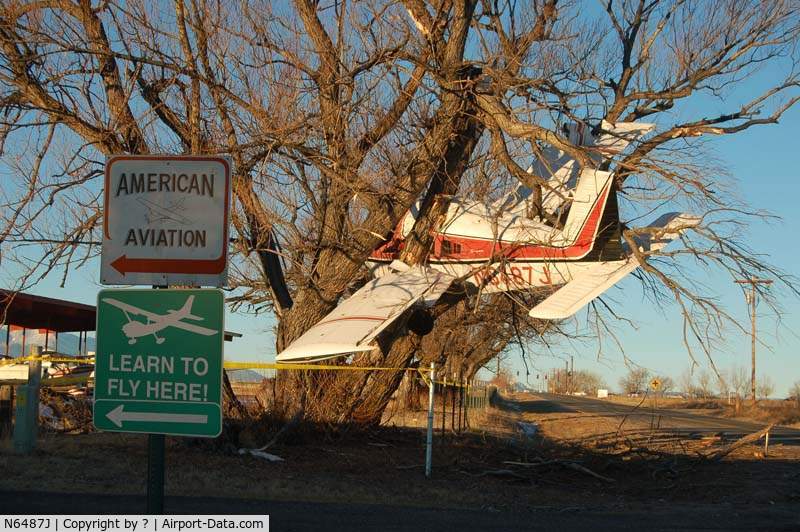
The picture of the Piper in a tree was addressed with a helpful email, cautioning the use of carburetor heat to prevent more visits with tree doctors, (and other doctors). As a piston driver, the correspondent's letter had great impact, and we all thank him for his helpful information:

"Hello,

"I am Writing your Blog with a simple message, based on your picture, to use Carburetor Heat with the lycoming engine, as a habit on all landings. Maybe it will save someone an Airplane, or maybe a picture on a Blog.

"I fly out of our local field- It is dry here, were it not for the mountain Range to the west of us, this place would be a desert.

"I know what I am saying will upset many pilots, but I feel it might do some good.

"I have no connection to the manufacturing or inside tales to give, but I have read your Blog, hoping for the best for Eclipse and the future of aviation. I belong to a small flying club with a few piston aircraft. We try to fly the aircraft by the "book". Our Instructor is from the local FBO, and is a very good instructor.

"Three years ago on a nice warm day, like today, a member was up in our Cherokee 235, it had just been refurbished, we were proud of it., and he was flying it by the "book"." APPROACH AND LANDING, 5. carburetor heat -off [unless icing conditions exist ]". It was a warm dry day and we had learned with the lycoming engine to use carb heat, as needed. As he entered the pattern he lost power. Carb heat only made matters worse [as it should], and with the heavy 540 in front, he was on his way down before he had time to do anything but find a road to land on. Our new shoulder harness left him with only a sore shoulder ,but the plane was a total loss.

"A year later our FBO rented out his Cherokee 180, as the Pilot went around the field, He also lost Power, as he came into land, He wasn't able to make the field, and so lined with the road running in front of the airport at Meadowlake Airport. No Carb Heat, as he was about to flare he faced a car coming down the road, and a head on collision, so at the last moment, he turned into the field to avoid hitting the car, and landed in a tree, Your Picture.

"From these experiences we have learned with the lycoming engine, GET IN THE HABIT, ALWAYS USE CARBURETOR HEAT ON LANDING, I hope these story's do some good for someone, and keep someone from landing in a tree.


"Sincerely,
xxx"

We certainly are thankful for the inputs, regarding the importance of fuel additives for turbines, and carb heat for Lycomings.